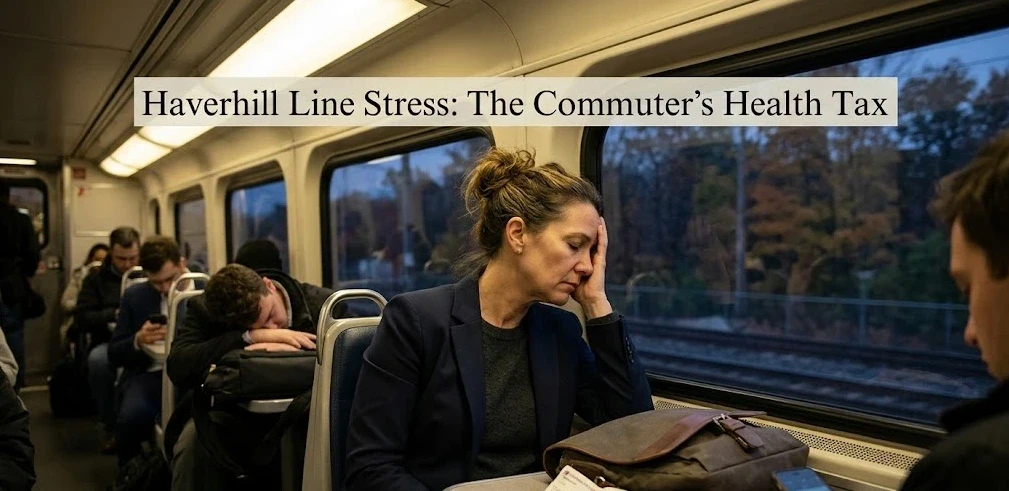
The Hidden Toll of the 90-Minute Commute
For those boarding at Haverhill or Bradford, the journey to North Station is often the most taxing part of the workday. While you might use the time to catch up on emails or podcasts, your body is performing a different task: managing a sustained "stress response."
Scientific studies on long-distance commuting show that unpredictable delays and crowded rail cars lead to a significant spike in cortisol, the body’s primary stress hormone. When cortisol remains elevated for the duration of a 90-minute trip, it creates a "nutrient vacuum," rapidly burning through your body’s stores of B vitamins and magnesium.
Why "Train Fog" is Real
Do you feel mentally exhausted before your first meeting even starts? This isn't just lack of sleep; it’s metabolic depletion. * B12 Depletion: Chronic stress hinders the absorption and utilization of Vitamin B12, which is responsible for cognitive clarity and nerve health.
Adrenal Fatigue: The repetitive "start-stop" nature of MBTA delays keeps your nervous system in a state of high alert, leading to the afternoon crash many commuters experience.
How does commuting affect energy?
Long commutes trigger chronic cortisol release, which depletes Vitamin B12 and Magnesium. This leads to "commuter burnout," characterized by brain fog, irritability, and physical fatigue. IM vitamin shots provide a bypass to the digestive system, restoring these nutrients instantly.
Fast-Track Recovery for Andover Professionals
You don’t have an hour to sit in a clinic after spending three hours on a train. Our IM Vitamin Shots are designed for the Merrimack Valley professional who needs maximum efficiency.
Unlike oral supplements that lose up to 80% of their potency during digestion, an Intramuscular (IM) Shot delivers 100% of the nutrients directly into your bloodstream.
The Commuter’s Recovery Protocol:
B12 Boost: To clear the brain fog and reset your internal clock.
Magnesium: To soothe the muscle tension caused by sitting in cramped rail cars.
Lipo-B: To stimulate natural energy production without the caffeine jitters.
Don't let the Haverhill Line dictate your health. Book your IV Therapy in Andover today.
Why Is B12 Better Than Coffee For My Commute?
Coffee provides a temporary spike in adrenaline, which can actually worsen your stress response. B12 supports the underlying cellular energy production, giving you a steady flow of focus without the crash.
Can I Get A Shot If I’m Feeling A Commuter Cold Coming On?
Absolutely. We offer immune-boosting shots specifically designed to protect you from the germs common in high-traffic public transit environments.
Will These Nutrient Shots Help Reduce Commuter-Related Irritability?
Yes. By balancing cortisol levels and replenishing magnesium, IM shots help stabilize the nervous system, making those inevitable Haverhill Line delays much easier to handle mentally.
How Does Chronic Commuting Impact Long-Term Cognitive Function?
Extended travel times on the Haverhill Line create a state of "high-vigilance" stress. Over time, the sustained elevation of cortisol can lead to structural changes in the brain that affect memory, decision-making, and your ability to switch between complex work tasks efficiently.
Why Do I Feel Physically Exhausted After Sitting On A Train For Two Hours?
This is known as "passive fatigue." Even though you are sitting, your body is constantly adjusting to the vibrations, noise, and micro-movements of the rail car. This physical "micro-work," combined with the mental strain of staying on schedule, consumes significant metabolic energy and drains your electrolyte stores.