Vitamin C (ascorbic acid) is perhaps the most famous nutrient in the world. We know it’s essential for skin, immunity, and energy. However, there is a massive disconnect between the amount of Vitamin C you consume and the amount that actually reaches your cells.
Understanding the "Absorption Wall" is the key to moving from basic supplementation to true cellular optimization.
1. The Bottleneck: How the Gut Controls Your Levels
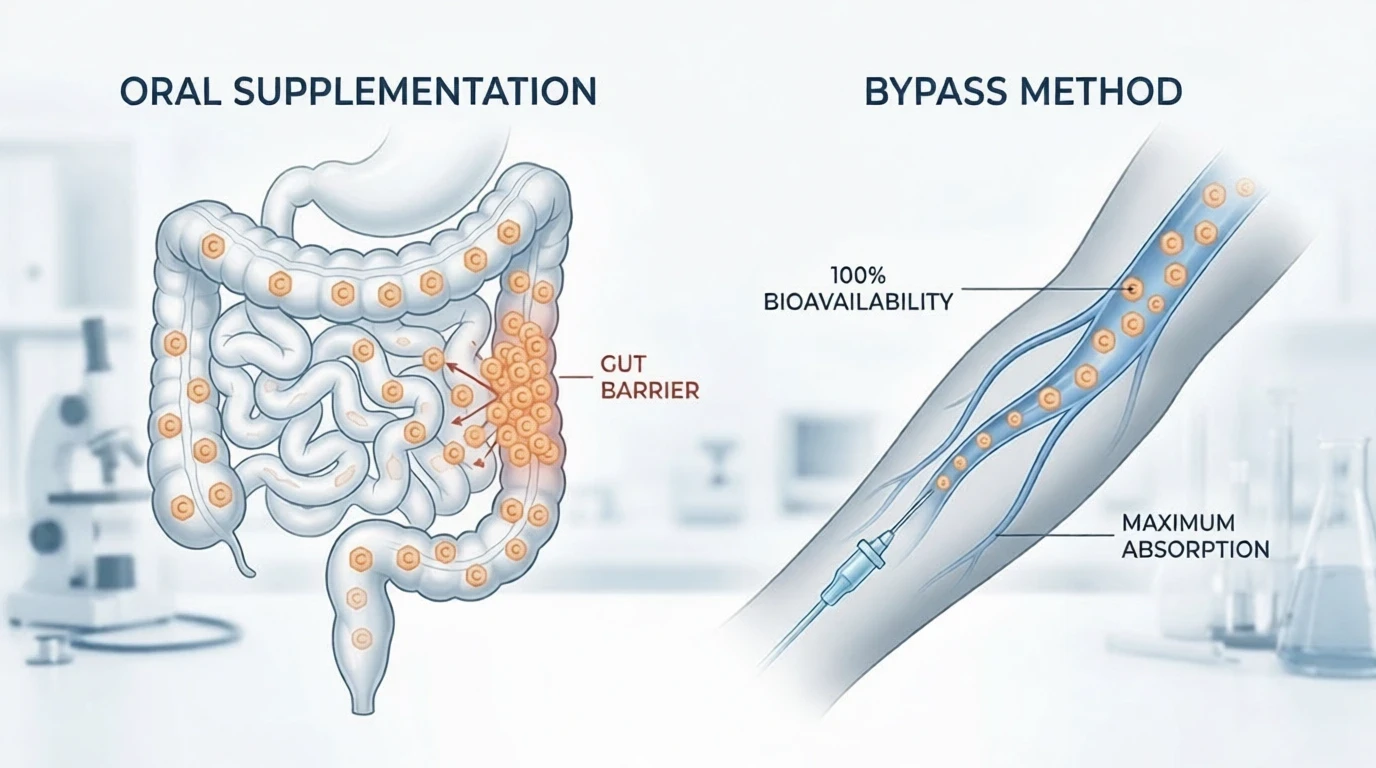
Unlike many other nutrients, Vitamin C absorption is not a passive process. Your body uses specialized "doors" called Sodium-dependent Vitamin C Transporters (SVCT1) in the small intestine.
The problem? These doors have a limited capacity.
At low doses (under 200mg): Your body absorbs nearly 100% of the vitamin.
At high doses (over 1,000mg): Absorption efficiency drops significantly—sometimes to less than 50%.
The rest simply stays in the digestive tract, where it can cause osmotic effects (like bloating or distress) before being flushed out.
2. The Renal Threshold: The "Second Filter"
Even if the gut lets the Vitamin C through, your kidneys act as a second gatekeeper. Once your blood plasma reaches a certain concentration (the renal threshold), the kidneys begin to aggressively filter it out into the urine.
This is why "mega-dosing" with traditional pills often results in nothing more than expensive urine. To stay above this threshold and achieve systemic benefits, the delivery method must be constant or bypass the digestive filters entirely.
3. Why Cellular Saturation Matters
Why are we so obsessed with high levels? Because Vitamin C isn't just a vitamin; at high concentrations, it acts as a potent signaling molecule.
Collagen Scaffolding: It is the "glue" that allows your body to build hydroxyproline, the primary component of skin and joint tissue.
Antioxidant Defense: It donates electrons to neutralize free radicals caused by pollution, UV rays, and stress.
Adrenal Support: Your adrenal glands hold one of the highest concentrations of Vitamin C in the body, using it to manage the biological response to stress.
4. Moving Beyond the Capsule
If you are looking for results that go beyond preventing a simple deficiency, you have to consider how to bypass the gut's "bottleneck."
While liposomal formulas offer a slight improvement, they still rely on the digestive system. For those seeking maximum plasma concentrations—the kind used in clinical wellness protocols—the gold standard is a delivery system that enters the bloodstream directly.
Standard Vitamin C bioavailability is limited by the gut's transport system (SVCT1). Absorption rates drop significantly as dosage increases, meaning oral intake rarely raises blood levels high enough for therapeutic "pro-oxidant" or deep tissue repair effects. To achieve these, a direct-to-bloodstream delivery method is required.
Vitamin C is far from the only nutrient with a gut bottleneck. NAD+ IV vs oral supplements shows the same first-pass metabolism problem, which is why IV delivery produces a measurably different result than oral precursors.
How to Optimize Your Intake?
To get the most out of this essential nutrient:
Divide your doses: Smaller amounts throughout the day absorb better than one large pill.
Focus on "Bypass" Methods: If you are targeting specific health goals, consider therapeutic vitamin C IV infusions to ensure 100% bioavailability.
Watch for "Buffered" Options: These can be gentler on the stomach but still face the same absorption ceiling.
Can I get enough Vitamin C from food alone?
You can certainly get enough to prevent scurvy (deficiency), but food sources alone cannot reach the high plasma levels required for advanced cellular repair or intense immune support.
Why does high-dose Vitamin C cause an upset stomach?
This happens when you exceed your "bowel tolerance." Because the gut cannot absorb the excess vitamin, it draws water into the intestines, causing discomfort.
What is the best time to take Vitamin C?
Since it is water-soluble and has a short half-life in the blood, it is best taken in divided doses or via a steady delivery method that ensures constant availability to the cells.
Which form of Vitamin C has the highest bioavailability?
The most bioavailable form is intravenous (IV) ascorbic acid. It provides 100% bioavailability by bypassing the digestive system entirely
What is the most effective way to absorb Vitamin C?
The most effective method is direct-to-bloodstream delivery. While food and pills are sufficient for daily maintenance, they face a "gut ceiling" that limits how much your body can actually use. Bypassing the gut ensures higher plasma concentrations without the gastric irritation often caused by high-dose oral supplements.