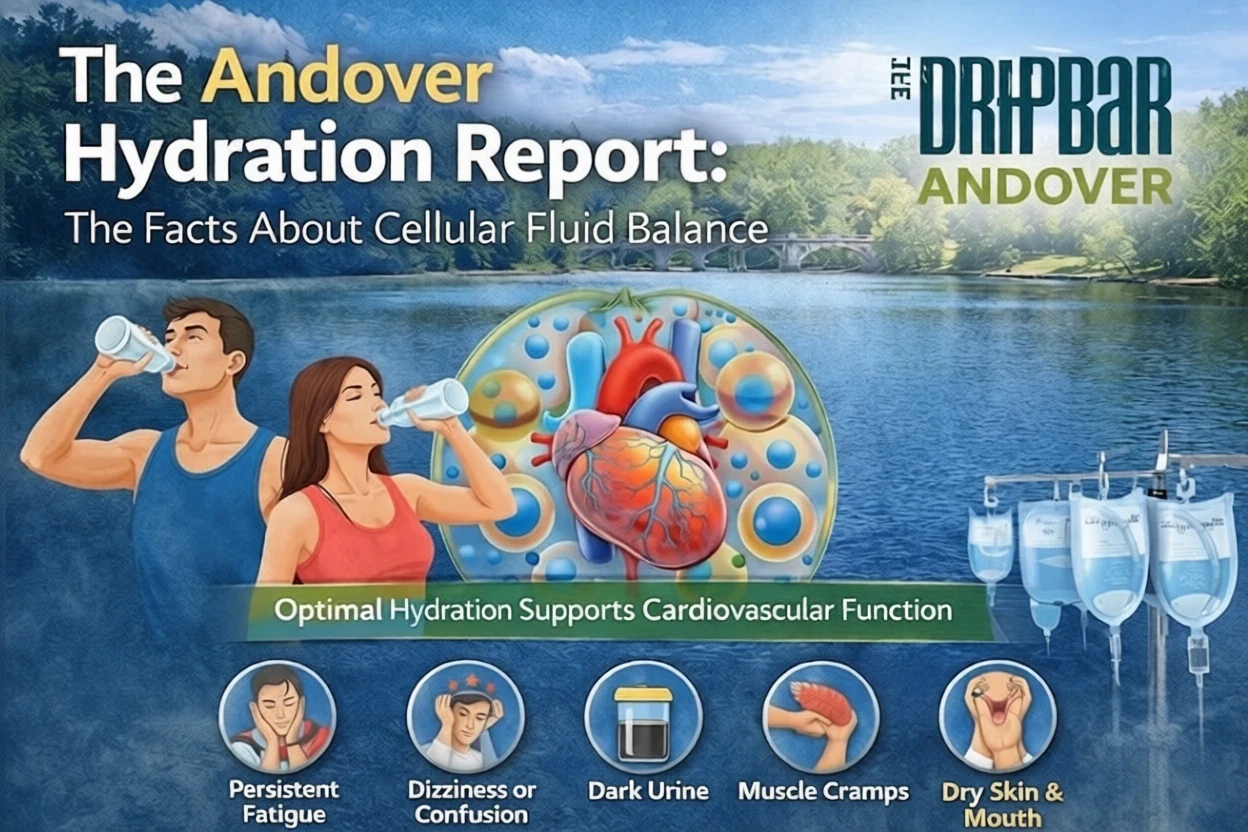
Living in Andover, MA, whether you are commuting to Boston or training at local athletic clubs, staying hydrated is more complex than just drinking water. In the fluctuating climate of the Merrimack Valley, maintaining cellular fluid balance is critical for cardiovascular health and daily performance.
Why Hydration Is Important For Your Body And Mind
Hydration is the foundation of every biological function. Why hydration is important goes far beyond thirst; it regulates body temperature, keeps joints lubricated, and delivers essential nutrients to cells. In Andover, where seasonal shifts can lead to rapid fluid loss, keeping your internal systems "topped off" ensures that your organs function at peak efficiency.
Does Hydration Affect Blood Pressure And Heart Health?
A common question we hear is: Does hydration affect blood pressure? The answer is a definitive yes. When you are dehydrated, your blood volume decreases, causing your body to retain sodium and constrict your blood vessels. This process can lead to spikes in blood pressure. By maintaining optimal fluid levels, you keep your blood at the correct viscosity, reducing the strain on your heart.
What Is The Best Way To Hydrate Your Body Quickly?
When people ask, What is the best way to hydrate your body?, they often think of sports drinks. However, for those in Andover looking for immediate results, clinical intervention is the gold standard. While oral water takes hours to process, our Hydration Recovery Drips deliver fluids and electrolytes directly into the bloodstream with 100% bioavailability.
How Much Should You Drink Water Every Day?
The standard "eight glasses a day" rule is often insufficient. So, how much should you drink every day? The truth depends on your activity level and the Andover weather. A more accurate guide is to drink half your body weight in ounces of water daily. However, during high-stress weeks or intense New England summers, your body may require supplemental electrolytes that plain water cannot provide.
What Are The 5 Warning Signs Of Dehydration To Watch For?
In our Andover clinic, we urge residents to watch for these red flags before they lead to a crisis. What are the 5 warning signs of dehydration?
Persistent Fatigue: Your heart has to work harder to pump blood.
Dizziness or Confusion: Even mild dehydration shrinks brain tissue.
Dark Colored Urine: A clear sign your kidneys are struggling to filter waste.
Muscle Cramps: A lack of electrolytes leads to involuntary contractions.
Dry Skin and Mouth: Your body is pulling moisture from the periphery to protect your core organs.
Solving The Hydration Gap In Andover, MA
If you find yourself struggling with these symptoms, it is time to move beyond the water bottle. To find a protocol specifically designed for rapid replenishment, explore our IV Therapy Menu. We specialize in clinical-grade solutions for the Andover community, ensuring you stay resilient against the demands of Massachusetts life.
Why Do I Still Feel Tired After Drinking Glasses Of Water?
Simply drinking water isn’t always enough if your cells aren't absorbing it. The water you drink passes straight through your system instead of hydrating your tissues.
Does Hydration Affect My Daily Blood Pressure Levels?
Yes. When you are dehydrated, your blood becomes thicker and more concentrated, which forces your heart to pump harder. This vascular resistance can lead to higher blood pressure readings. Staying consistently hydrated keeps your blood volume stable and reduces the strain on your cardiovascular system.
How Much Should I Actually Drink Every Single Day?
While the "8 glasses" rule is common, a more accurate goal is drinking roughly half your body weight in ounces. However, factors like your local climate, activity level, and caffeine consumption can increase this requirement. Listening to your body’s thirst signals and monitoring urine color is the best way to track your needs.
What Is The Most Efficient Way To Rehydrate My Body?
While drinking water is essential for daily maintenance, the most efficient way to reach 100% cellular saturation is through clinical hydration. By delivering fluids and electrolytes directly into the bloodstream, you bypass the digestive system's limits, providing an immediate reset for your energy and focus levels.
Why Do I Get A Headache When I Haven’t Had Enough Water?
When you are dehydrated, your brain tissue actually loses fluid and temporarily shrinks, pulling away from the skull. This physical contraction triggers pain receptors surrounding the brain. Once you rehydrate and your brain tissue returns to its normal state, the "dehydration headache" typically subsides.