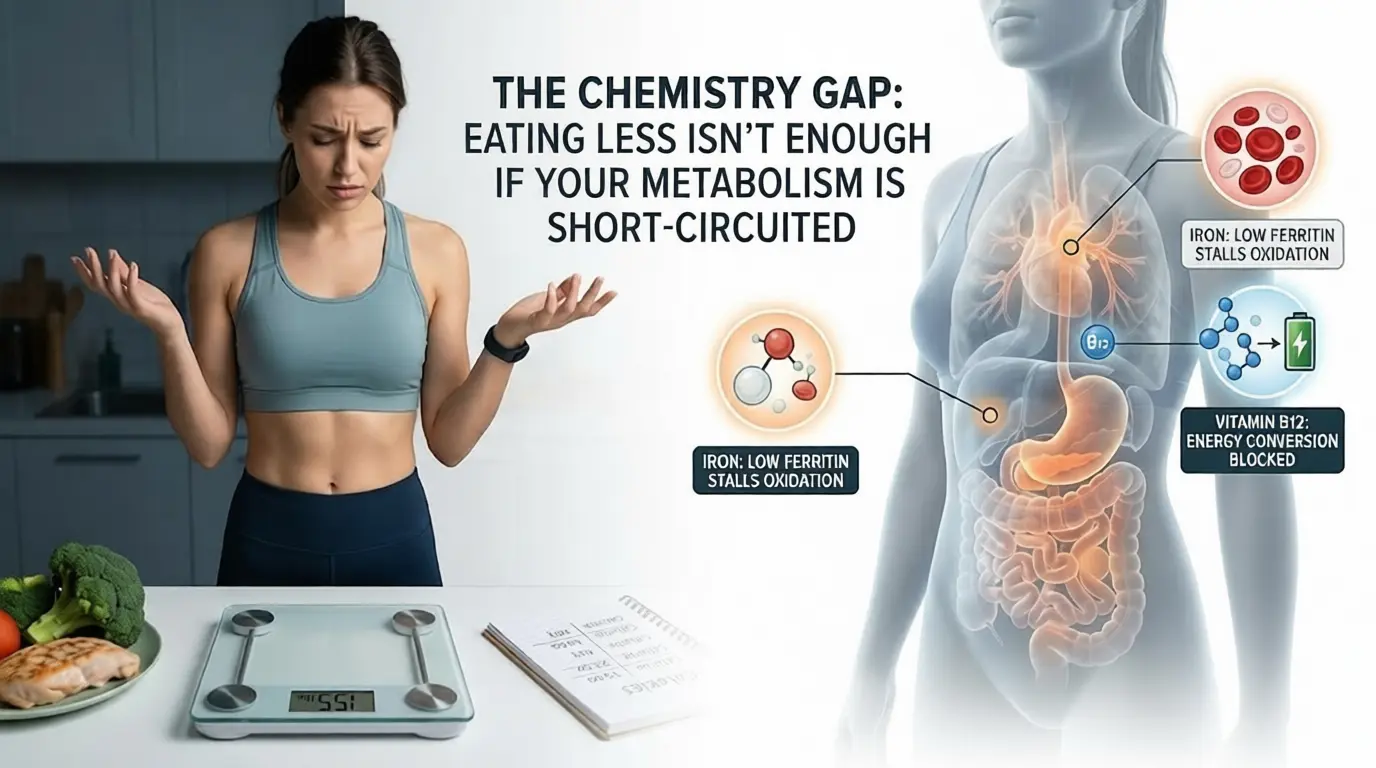
A calorie deficit that isn't producing weight loss is usually not a willpower problem, it's a metabolic one, and low-grade deficiencies in vitamin B12, magnesium, and iron are among the most common, most overlooked causes because standard bloodwork often reads as "normal" even when levels are too low to support efficient metabolism.
Quick fact: Studies estimate that subclinical B12 deficiency, levels low enough to affect energy metabolism but not low enough to trigger a deficiency diagnosis on standard labs, is present in a meaningful share of adults who report unexplained fatigue and stalled weight loss.
Why Calorie Counting Alone Isn't Working
A calorie deficit is a math problem, but metabolism is a chemistry problem, and if the enzymes and cofactors that convert food into usable energy are running short, the body burns fewer calories at rest even while eating less. This is the gap between "eating less" and "losing weight" that frustrates so many people who are doing everything the diet books tell them to do.
The Deficiency Most People Rule Out Too Fast
Most people assume bloodwork alone rules out a deficiency. In practice, standard reference ranges are wide, and a level that sits at the low end of "normal" can still be too low for optimal metabolic function. This is especially true for B12, where the standard range misses functional deficiency in a significant number of patients.
Vitamin B12: The Energy Metabolism Nutrient Most Often Missed
Vitamin B12 is a cofactor required for the metabolic pathways that convert fat and carbohydrate into usable cellular energy, and low B12 status is directly linked to fatigue, sluggish metabolism, and reduced motivation to stay active, three factors that compound into a stalled weight loss plateau.
Who Is Most at Risk
Adults over 50, due to reduced stomach acid needed for B12 absorption
Anyone on metformin, which depletes B12 over long-term use
Vegetarians and vegans, since B12 is found almost exclusively in animal products
Anyone with undiagnosed gut absorption issues, including low stomach acid or prior bariatric surgery
How to Check It Properly
Ask for a full B12 panel, not just a basic metabolic panel
Methylmalonic acid (MMA) testing catches functional deficiency that standard B12 tests miss
Symptoms worth flagging to your provider: persistent fatigue, brain fog, tingling in hands or feet, and a stalled scale despite consistent effort
If you want the full picture on dosing, delivery methods, and how IV B12 compares to oral supplementation, our vitamin B12 IV therapy guide covers it in depth.
Magnesium: The Mineral Behind Insulin Sensitivity
Magnesium is a cofactor in over 300 enzymatic reactions, including the ones that regulate insulin sensitivity and blood sugar control, and low magnesium status is associated with poorer insulin response, which makes the body more prone to storing fat rather than burning it for fuel.
Signs of Low Magnesium
Muscle cramps or twitching, especially at night
Poor sleep quality or difficulty staying asleep
Sugar cravings that feel disproportionate to actual hunger
Fatigue that doesn't match activity level
Why It Gets Missed
Standard blood magnesium tests measure less than 1% of the body's total magnesium, since most of it is stored in bone and soft tissue rather than circulating in blood. A "normal" serum magnesium result does not rule out a functional deficiency affecting metabolism.
A nutrient deficiency is not the only hidden reason a plateau refuses to budge. For some, the missing piece is hormonal rather than nutritional, which is why it's worth understanding how semaglutide works for weight loss before assuming diet and exercise alone should be enough.
Iron: Low Ferritin Without Anemia Still Slows You Down
Iron deficiency can suppress metabolic rate and reduce exercise capacity well before hemoglobin drops low enough to be classified as anemia, because ferritin, the body's iron storage marker, affects thyroid hormone conversion and cellular oxygen delivery long before a formal anemia diagnosis is reached.
Why Ferritin Matters More Than a Standard Iron Panel
Ferritin is the storage marker, and low ferritin can precede anemia by months or years
Low iron impairs thyroid hormone conversion, which directly affects resting metabolic rate
Reduced oxygen delivery to muscle tissue lowers exercise capacity, making workouts feel harder and burn fewer calories
Women with heavy menstrual cycles and endurance athletes are at particularly high risk
Iron status also interacts with how well the body uses other nutrients. Ascorbic acid (vitamin C) significantly improves iron absorption when taken alongside iron-rich foods or supplements, which is one reason it's often paired in nutrient support protocols. Our ascorbic acid guide explains how vitamin C supports this process along with its other metabolic roles.
What to Do If a Deficiency Is the Real Reason
Request a full nutrient panel, not just a basic metabolic screen: B12, MMA, ferritin, magnesium (RBC magnesium is more accurate than serum), and a thyroid panel including TSH
Don't rely on symptoms alone to rule deficiencies in or out, since ranges of "normal" often miss functional shortfalls
Address absorption, not just intake, since oral supplements are limited by gut absorption in people who are already deficient
Rebuild the metabolic foundation before cutting calories further, since deeper restriction on top of a nutrient shortfall usually backfires
For Andover residents dealing with a stalled plateau after ruling out the basics, our medical weight loss program starts with a full intake to identify whether a nutrient gap is part of what's holding progress back, rather than assuming it's purely a calorie equation.
Is It Normal To Feel Like You're Not Losing Weight?
Yes, especially in the first few weeks of a new routine, since water retention, muscle gain, and hormonal fluctuation can mask fat loss on the scale. If the plateau persists for more than three to four weeks despite consistent effort, it's worth checking for an underlying nutrient or metabolic cause.
Why Am I Not Losing Weight In A Calorie Deficit?
A true calorie deficit should produce weight loss over time, but nutrient deficiencies, thyroid dysfunction, chronic stress, and poor sleep can all suppress metabolic rate enough to slow or stall progress even when intake is genuinely lower than expenditure.
Why Is My Body Not Letting Me Lose Weight?
This is often a metabolic adaptation response, where the body compensates for reduced calorie intake by lowering resting energy expenditure, especially if the deficit has been in place for a long period or if underlying deficiencies in B12, iron, or magnesium are limiting energy production at the cellular level.
What Is Blocking My Weight Loss?
Common blockers beyond calorie intake include nutrient deficiencies (B12, iron, magnesium), undiagnosed thyroid dysfunction, chronic sleep deprivation, elevated stress hormones, and medications that affect metabolism or appetite regulation.
How To Kick Start Weight Loss?
Start with a full nutrient and metabolic panel rather than cutting calories further, address any deficiencies found, prioritize sleep and stress management, and reintroduce a moderate calorie deficit once the underlying metabolic foundation is corrected.